
Juan Sacristán doesn’t remember wildfires by their names. He remembers how they affected his life: an alarming phone call, ash covering cars, and the search for masks after stores had sold out.
Born in Colombia, Juan moved with his family to Queens, New York, in 1964. He was one of six children, and his parents wanted better educational opportunities for them all. His path eventually took him to California to study chiropractic, then to San Diego and later Santa Fe, New Mexico. Speaking Spanish opened doors to international work, although hearing difficulties he began to notice complicated a profession that depended on listening to others.
After their daughter was born in 1994, Juan and his then-wife returned to California to be closer to her parents. They discovered Napa almost by accident. While searching for a home during the winter of 1995–1996, flooding disrupted their plans to visit Sonoma. A detour brought them to a development of new houses in Napa. There, they found a home.
Living in the valley also meant encountering its hazards. Juan remembers the earthquake that knocked belongings from the walls. And the 2017 wildfires taught him that danger could reach him even when he couldn’t see flames nearby.
One night, his former wife called, worried about fire in the mountains visible from Browns Valley.
“I went to see if it was an emergency or if she needed help,” Juan said. “But I found little sign of a fire, just spooked neighbors.”
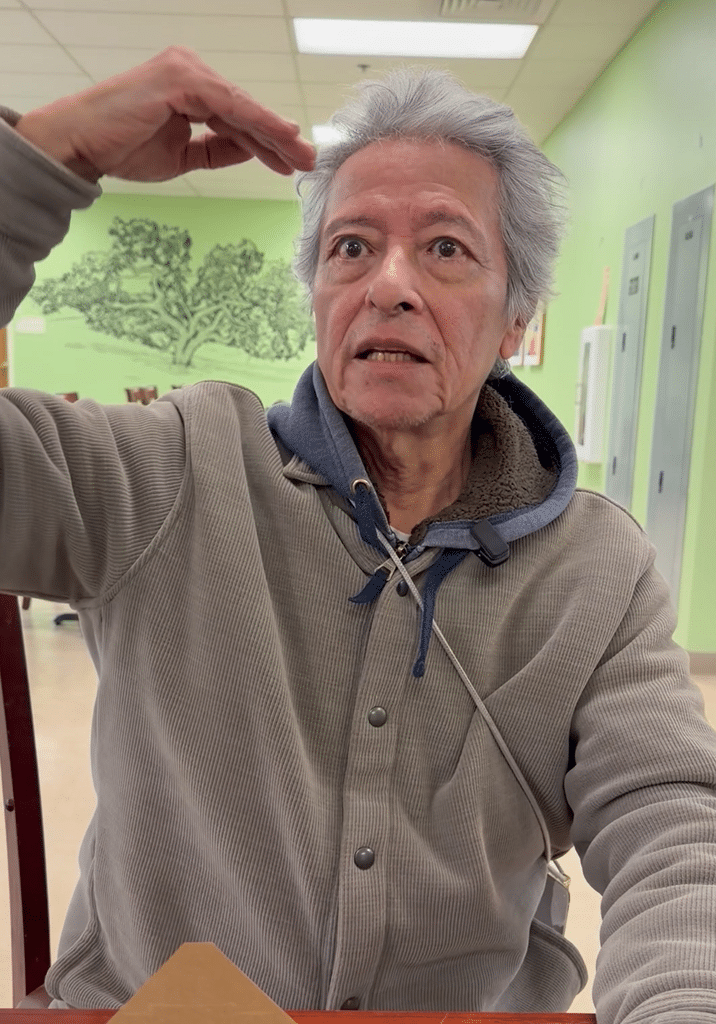
The following morning, Juan found ash and burned debris everywhere. Wind had carried the effects of the fires into his surroundings.
“It was the first time I really realized this was a problem,” he recalls.
They stayed with a friend in Berkeley for three or four days. When they returned, there was ash to clean up. Finding masks proved difficult, too; they eventually located some at a hardware store in Albany, more than 30 miles away.
“I’ve learned that keeping Napa safe takes all of us, whether we live in town or in the hills. We need to clear dry brush, prepare our homes, stay alert and follow local officials’ instructions,” he says.
That experience continues to shape his vision of Napa Valley’s future.
When Juan sees new neighbors settling into life in Napa, he hopes they’ll get to know the people around them—and talk about what they would do if fire threatened their street. For those who arrived after 2020, the danger may feel distant. His experience tells him otherwise. He wants neighbors to help one another prepare, stay alert and check on those who might need a hand, so that when fire returns, everyone has someone looking out for them.
Juan keeps the masks he found during those fires.
“For next time,” he says, hoping he will never have to use them again.