
September 2026 Update:
High Above Oakville: The Wildfire Work Most People Never See
493 acres down, 1,323 to Go
With three contractors now working across the project, September marks the largest month of field activity since the grant began.
Hand thinning is underway five days a week in a target project area above Oakville, beginning at the ridgeline and progressing downslope. A second crew begins work at Enchanted Hills this month, with a third target area in active treatment. Contracts are executed for the remaining scope, with at least another year of field work ahead of us.
To date the project has completed 493.5 treatment acres and invested roughly $2.2 million of it’s $6.7 million CAL FIRE Forest Health grant, an average of about $4,458 per treated acre. The relatively high cost reflects the difficulty of accessing the steep terrain and the complexity of the forest management prescriptions required.
Two acreage figures are used in forest health reporting, and they measure two different things. A footprint acre is a physical acre of ground. A treatment acre is a unit acre of work performed on it: cutting, hand-piling, and burning the same acre records three treatment acres within one footprint acre, as an example. The project’s 889 footprint acres therefore carry 1,816 treatment acres of scheduled work.
Given terrain and seasonal conditions, current treatments rely primarily on hand thinning, with cut material either hand-piled for later burning or moved uphill to a chipper where slopes make piling unsafe. Mulching remains a part of these prescriptions set and will resume outside of peak fire season. Pile burning is anticipated for later in November or December, as weather and fuel moisture allow.
Several important milestones have been reached since the March update: Jacob Harrower has joined the project as its Registered Professional Forester and four California Cooperative Forest Management Plans have been developed for participating properties within this grant. These plans are prepared by a registered professional forester and document boundaries, access, waterways, forest type and stand condition, and most importantly, establish the management roadmap that most funders require.
A central prescription across the project is the removal of encroaching Douglas fir that has grown up through the stand of oak, madrone and bay. Taking that fir out eliminates ladder fuels that carry fire from the ground and into the canopy, returning light and water to the oak, madrone, and bay left standing.
Napa Firewise looks forward to the coming work ahead, including future scoped reforestation practices.
March 2026 Update
In January, Napa Communities Firewise Foundation hosted the first CAL FIRE site visit under one of our Forest Health grants, welcoming CAL FIRE Forestry Assistant II Jack Shrimpton to Enchanted Hills and adjacent land.
Joined by Napa Firewise staff, Registered Professional Forester Don Gasser, GIS & Project Manager Peter Lecourt, and ecologist/wildland consultant Carol Rice, the team reviewed completed and in-progress work across 111 unique acres. This initial visit provided an opportunity to assess progress, align on prescriptions, and discuss how ongoing treatments support long-term land resilience.
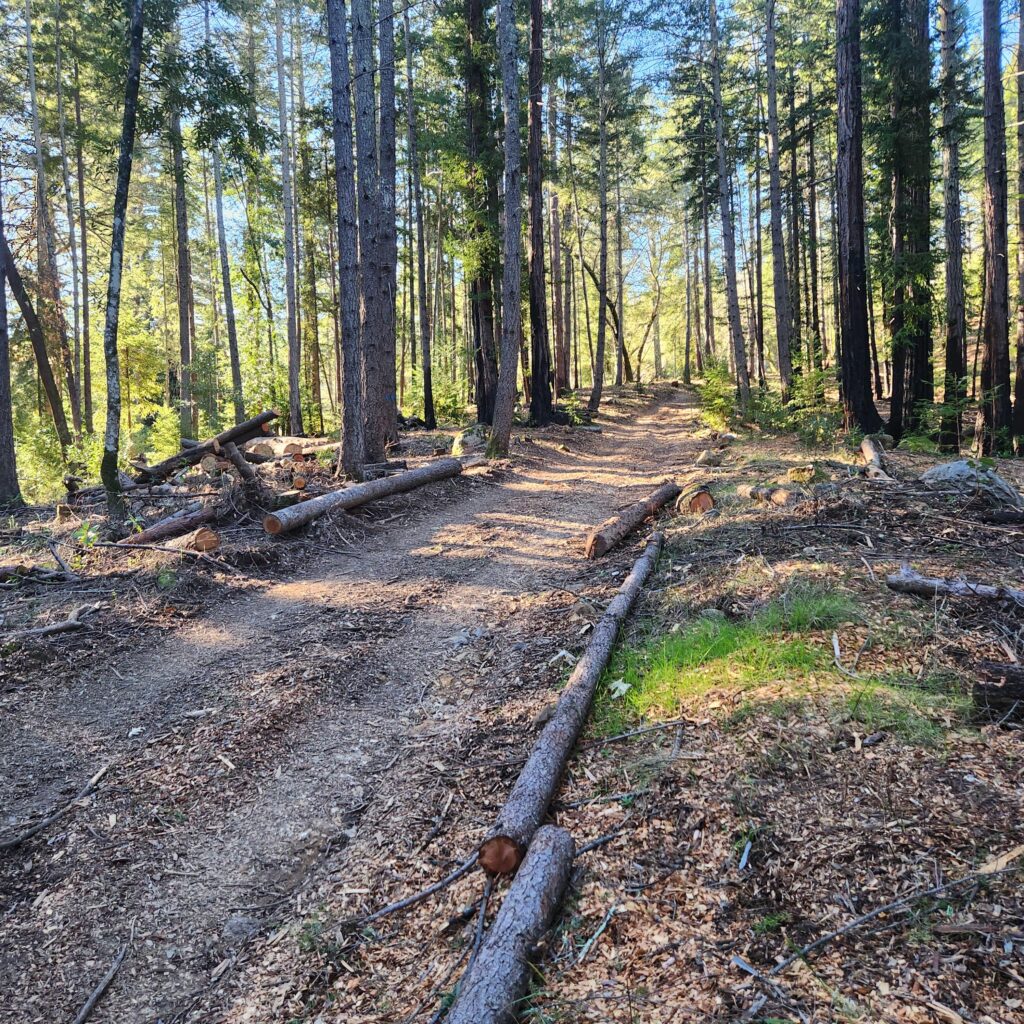
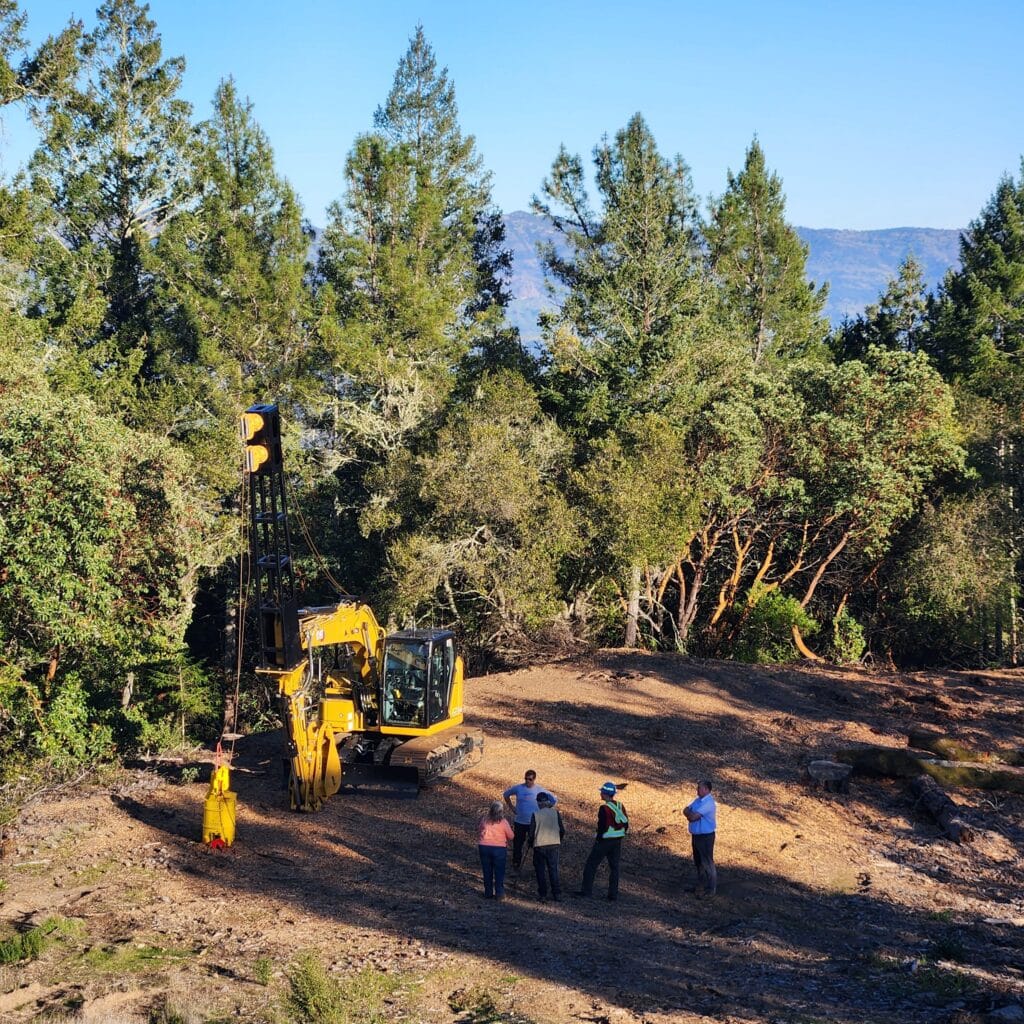
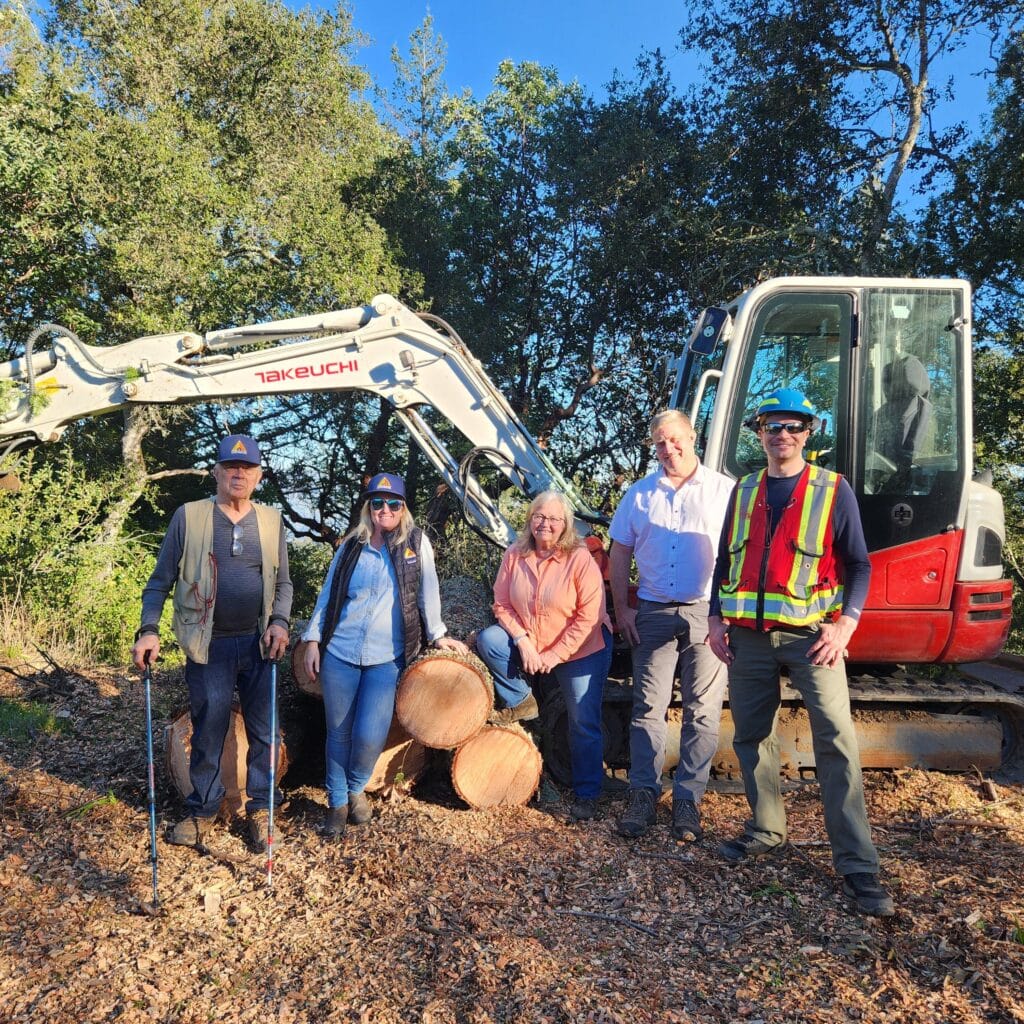
Work to date includes mulching, hand thinning, piling, burning, and chipping — all guided by prescriptions designed to prepare the land for safer wildfire behavior while strengthening forest health over time. By removing ground and ladder fuels and applying variable-density thinning, these treatments support the development of larger, healthier trees and a more resilient forest structure, including a gradual shift toward a stronger presence of hardwoods.
CAL FIRE shared positive feedback on progress to date and identified opportunities for additional Douglas fir removal in select areas. These recommendations reflect the adaptive nature of this work, as the project team continues to balance ecological benefit, cost, safety, and long-term resilience outcomes as conditions evolve.
We are fortunate that this project benefits from deep local expertise. Don Gasser, the Registered Professional Forester for this effort, brings more than 50 years of experience in
forest management, including authorship of historic Forest Management Plans for the Mayacamas Range and decades of leadership in forest science and education.
Looking ahead, work will continue across Enchanted Hills and adjacent lands, with an RFP in development for additional properties and ongoing coordination with landowners. Together, these efforts reflect a landscape-scale approach to land resilience — restoring ecological function today so Napa County’s forests are better prepared for the fires of tomorrow.
January 2026 Update
Project Begins to Takes Shape on the Ground!
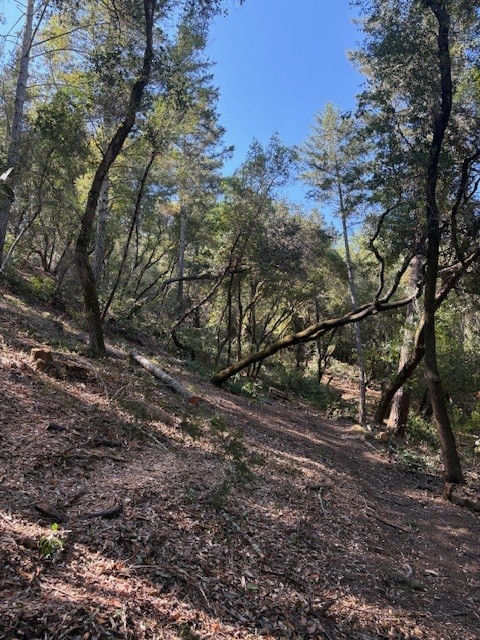
This on-the-ground verification work is foundational: the prescriptions guiding this project are designed not just to reduce fire risk, but to restore forest structure over time — favoring larger, more resilient trees, promoting hardwood development, and building the kind of diverse, fire-adapted forest that handles disturbance better in the long run.
Image to the left shows a hillside area with targeted hand thinning for fuels management.
Environmental compliance review was completed for the majority of treatment components through the CAL VTP Project Specific Analysis process. An amendment was submitted to CAL FIRE to refine treatment boundaries and align the project scope with what crews observed in the field. This kind of adaptive adjustment — ground-truthing the plan against actual conditions — is a normal and important part of responsible forest management.
The Napa Veterans Home / Lighthouse for the Blind Wildfire Resiliency Project — a $6.7 million CAL FIRE Forest Health grant — is moving from planning into the field. During the fall 2025 reporting period, the project team focused on finalizing treatment prescriptions, collecting access road condition data, and confirming operability across treatment areas on the ground.
Work is underway across multiple treatment areas spanning hundreds of acres of private forestland in the Mayacamas Range. Treatments will include mastication, hand thinning, pile burning, chipping, oak woodland restoration, and prescribed fire, sequenced to build on each other over the life of the grant.