
On August 19, a crew of 18 workers from Great Tree Tender began cutting brush and removing hazardous vegetation along Knoxville Road near the community of Berryessa Pines. It was the first visible work of a much larger effort of community risk reduction.
A 2026 $100,000 PG&E grant to Napa Communities Firewise Foundation is funding four separate wildfire resilience projects across Napa County—from Lake Berryessa to Angwin and Atlas Peak. Although the locations and treatments are different, each project addresses essentially the same challenge: reducing hazardous vegetation where wildfire could threaten homes, critical infrastructure and the roads residents and firefighters depend on during an emergency.
“We’re very proud of our long-standing relationship with Napa Firewise,” said Dave Canny, vice president, PG&E North Coast Region. “That partnership comes through financial support for projects that benefit the community broadly, from wildfire mitigation to improving ingress and egress, but it also comes through thought leadership and engagement.”
The work also illustrates an important part of wildfire preparedness that often goes unnoticed. By the time wildfires begin, much of the work that can shape the outcome has already happened.
“At PG&E, we have a ‘stand’ that catastrophic wildfires shall stop,” Canny said. “We have an important role to play as it relates to our equipment, but we know that for that stand to become true, it’s going to take all of us.”
According to Canny, PG&E sees Napa County, where wildfire risk is particularly acute, as a place where utilities, agencies, community organizations and landowners can demonstrate what that shared approach looks like in practice.
Projects must be identified, planned, environmentally cleared, funded, contracted and made ready so crews can move quickly when resources become available.
In this case, $100,000 is being put to work in four priority areas.
Berryessa Pines
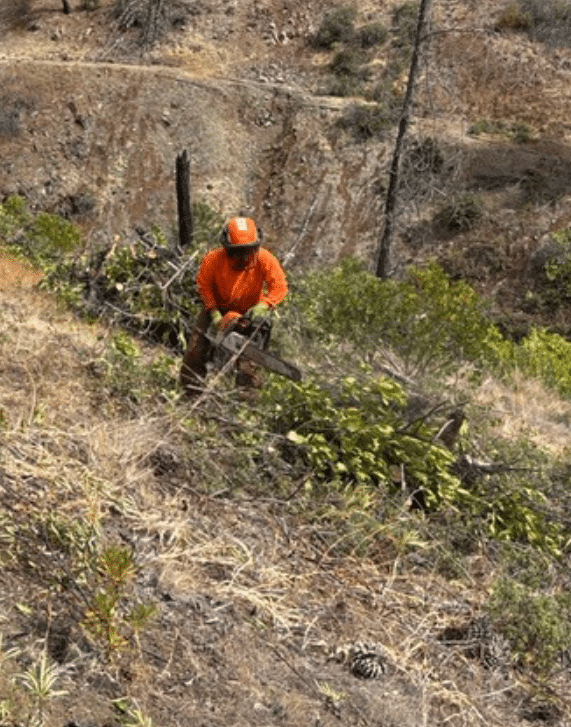
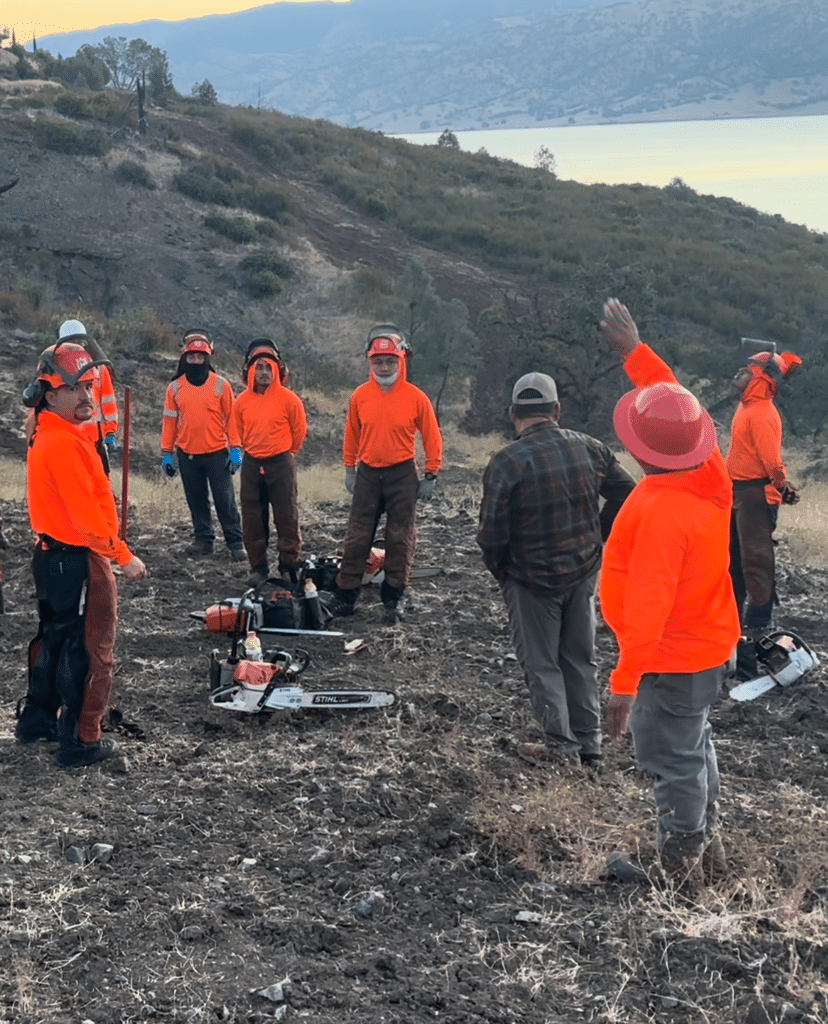
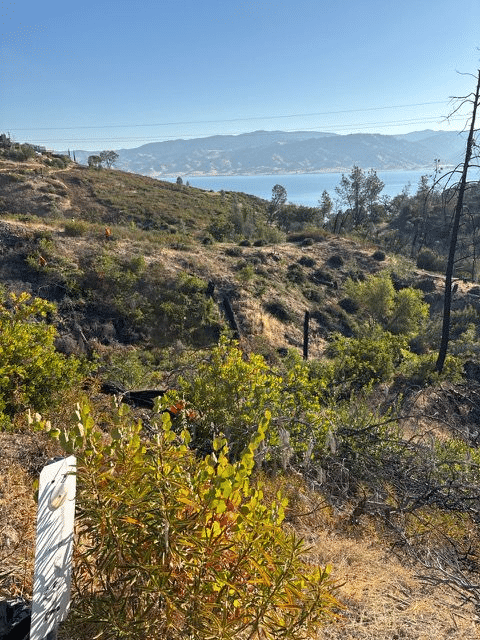
The first project at Berryessa Pines was completed by Great Tree Tender in three days, under the direction of Napa Firewise Project Lead Ken Pridmore.
Led in the field by Alfonso Gallegos, the contractor began work August 19 with an 18-person crew removing hazardous fuels along Knoxville Road and around the Berryessa Pines community.
Rather than clearing vegetation indiscriminately, the crew reduced approximately 50 percent of targeted brush, concentrating treatment near homes, infrastructure and other areas where excessive vegetation could increase wildfire intensity or make firefighting more difficult and dangerous.
That distinction is important. Wildfire resilience does not mean stripping the landscape of vegetation. The goal is to strategically reduce the amount and arrangement of fuel so that,when a wildfire arrives, the fire is less intense and firefighters have a better opportunity to work safely and effectively.
Some of the material removed during the Berryessa Pines project was gathered into burn piles and left in place. Those piles are expected to be burned safely by CAL FIRE in December, after the area has received approximately five to ten inches of rain and conditions allow for safe burning.
It’s a process that stretches across seasons: cutting and preparing fuels during the dry months, then completing disposal when winter moisture makes burning safer.
Berryessa Highlands: Taking the Same Crew to the Next Priority
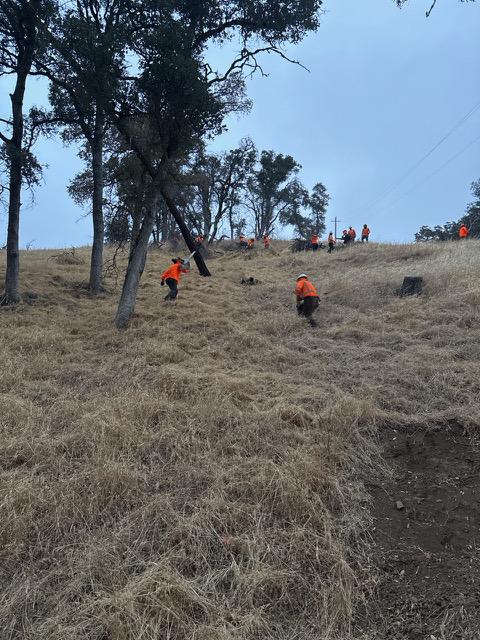
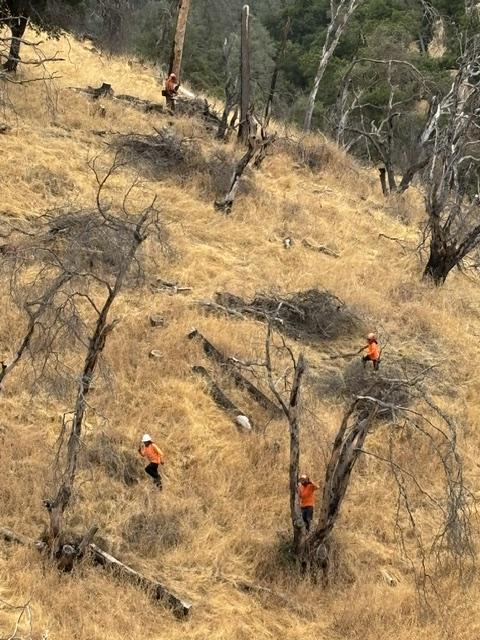
From Berryessa Pines, the Great Tree Tender crew moved on to Berryessa Highlands, accomplishing the same deliberate treatment between Westwood Road and Arroyo Grande Road.
Moving an experienced contractor from one nearby project directly to another allows Napa Firewise to put the PG&E funding to work efficiently while continuing to address the risks around communities in the Lake Berryessa area.
The Highlands project also reflects a broader strategy: wildfire resilience is more effective when individual treatments begin connecting with other work across a landscape. While a cleared property, roadside treatment or fuel reduction project has value on its own, that value can increase when it becomes part of a larger network of treated areas, defensible space and accessible roads.
Angwin: Protecting Roads People May Need Most
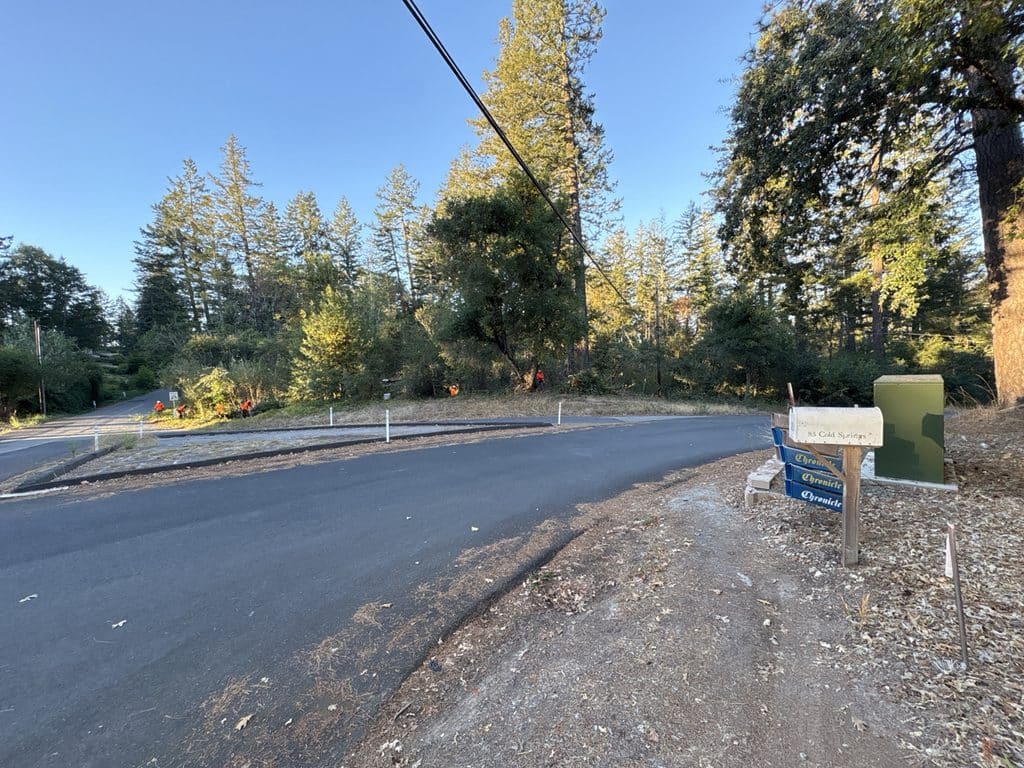
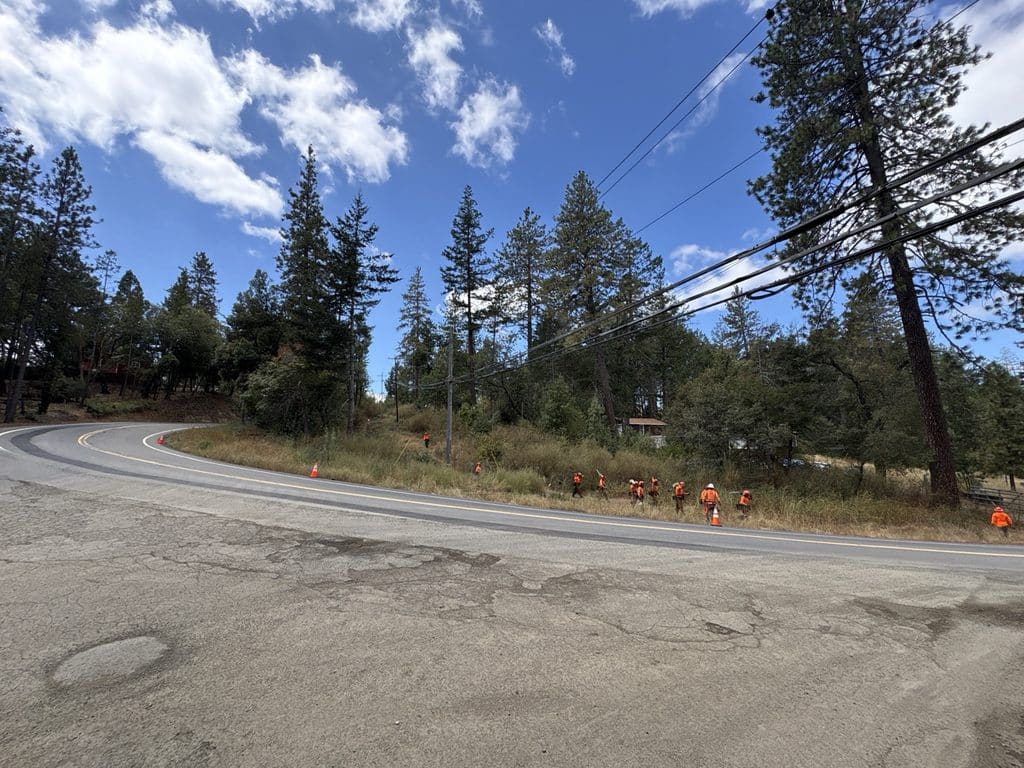
The third project moves north to Angwin and focuses specifically on evacuation routes.
Under the direction of Napa Firewise Land Resilience Program Manager Steven Burgess, crews are targeting two roadside sections between Howell Mountain Road and Cold Springs Road.
The work includes removing understory and ladder fuels, dead and dying vegetation and other material that could carry fire from the ground into larger trees. Bay trees and other vegetation will either be removed where appropriate or limbed up to create greater separation between surface vegetation and tree canopies. Along an evacuation route, that work has two purposes. It can reduce the intensity of a wildfire approaching or crossing the roadway, and it can help preserve access for residents evacuating and firefighters moving into an incident.
That makes roadside vegetation management more than a landscaping project. During a wildfire, these roads can become critical pieces of emergency infrastructure.
Atlas Peak Road: Addressing a Critical Pinch Point
The fourth project addresses a very different vegetation problem along Atlas Peak Road northeast of the city of Napa, another important evacuation route.
Managed by Napa Firewise Project Monitor Ty Brenninger and using contractor Artemis, the project targets a pinch point where dense eucalyptus grows on both sides of a canyon with Atlas Peak Road running through the middle.
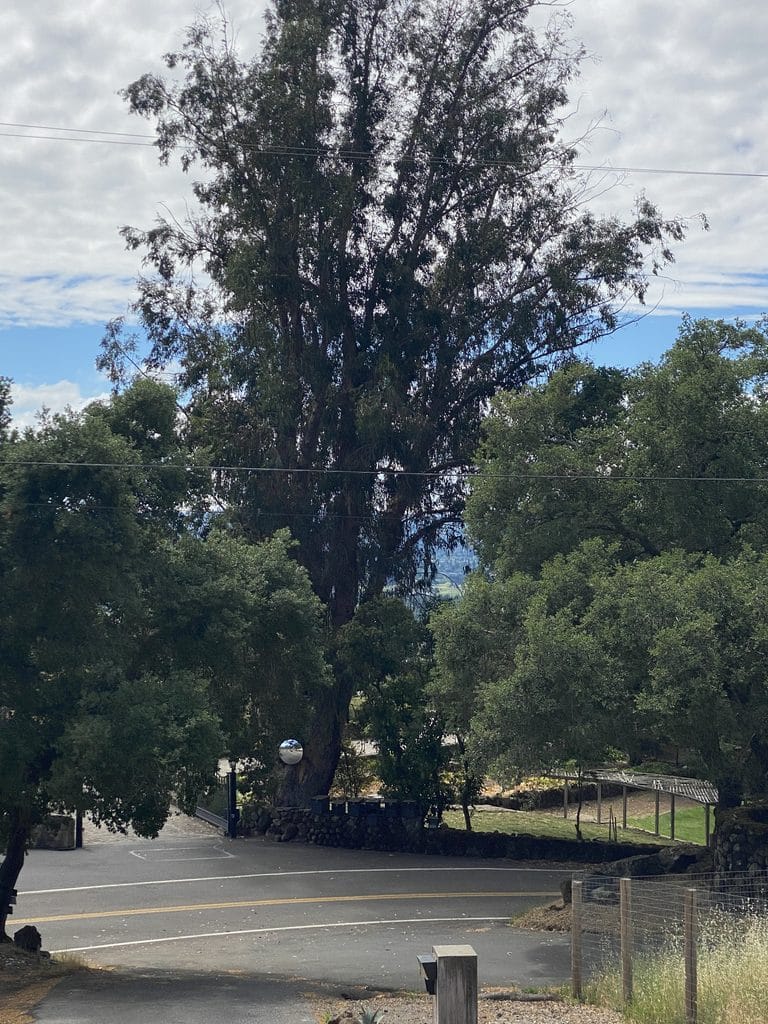
Eucalyptus presents a particular management challenge because simply cutting the trees and vegetation does not necessarily solve the problem. Eucalyptus can resprout aggressively after cutting, as can bay and poison oak.
For that reason, the Atlas Peak project will combine hand labor with carefully targeted herbicide treatment designed to greatly reduce resprouting. Herbicide will be applied by a trusted, licensed applicator as part of the overall vegetation-management strategy.
For that reason, the Atlas Peak project will combine hand labor with carefully targeted herbicide treatment designed to greatly reduce resprouting. Herbicide will be applied by a trusted, licensed applicator as part of the overall vegetation-management strategy.
The result should be a more durable treatment at a location where vegetation, topography and an important roadway converge. And that matters not only to the people who live immediately beside the project.
As Burgess explains, “This benefits all who use Atlas Peak Road.”
Roadside treatments also address one of the most common places where fires begin. With the overwhelming majority of ignitions occurring close to roads or structures, reducing hazardous vegetation along these corridors can help address wildfire risk where human activity and wildland fuels meet.
$100,000 Put to Work Across Napa County
Berryessa Pines. Berryessa Highlands. Angwin. Atlas Peak. Four locations. Four sets of conditions. Four different treatments.
What connects them is the strategy behind the work. The PG&E grant allows Napa Firewise to take projects that have already been identified as priorities and move them from planning into implementation.

“It’s easy to say partnership,” Canny stressed. “It can be much more challenging to actually do the work—to drive collaboration and ultimately improve outcomes.”
None of these projects can eliminate wildfire from Napa County. They are not intended to. Instead, the goal is to change the conditions a future wildfire encounters—to reduce available fuel, protect critical routes, improve firefighter access and give communities more options when minutes matter.
And sometimes progress begins in a very tangible way: 18 people with saws and tools arriving on Knoxville Road on an August morning, turning a grant on paper into work on the ground.
Beyond the Grant: PG&E’s Broader Approach to Wildfire Resilience
The $100,000 investment in Napa Firewise is one piece of a much larger wildfire strategy that PG&E describes as “layers of protection,” combining early detection and situational awareness, operational safeguards and long-term improvements to its electrical system.
According to PG&E’s Dave Canny the first layer requires knowing when and where dangerous conditions are developing.
“The first is situational awareness,” he said. “And that includes our AI-enabled fire cameras as well as weather stations that inform our meteorology team, help us forecast wildfire risk and allow us to be in the appropriate operational posture to ensure community safety.”
The camera network can also play an important role once a fire starts. According to Canny, AI-enabled cameras have helped identify fires and initiate dispatch before anyone has called them in.
“Once an ignition has started, it’s all about capturing and suppressing that ignition.”
A second layer consists of operational programs intended to reduce the likelihood that PG&E equipment will start a wildfire. Among them are Enhanced Powerline Safety Settings, which can automatically shut off power when the system detects a potential hazard, and Public Safety Power Shutoffs during periods of particularly dangerous wildfire conditions.
The third layer is longer-term investment in the electrical system itself.
“That involves undergrounding, where we’re making great progress, as well as overhead hardening and system upgrades focused on covered conductor and stronger poles.”
Undergrounding eliminates nearly all wildfire risk associated with overhead lines and results in about 90% fewer outages for customers served by those lines.
Canny emphasized, however, that PG&E’s infrastructure improvements can only address part of the larger wildfire challenge.
“Ultimately, reducing wildfire risk in our communities must involve all of us. That means private landowners, individual customers, partners like Napa Firewise, the state and the federal government.”
That’s where investments like the $100,000 Napa Firewise grant fit into PG&E’s broader strategy. Canny said the company focuses on opportunities where its contribution can help attract or complement other funding.
“Wherever possible, we look for opportunities where those dollars can be matched or magnified to make them go further and ultimately move toward a better outcome for our hometowns.”
In Napa County, that means PG&E’s wildfire resilience investments extend beyond poles, wires and underground electrical lines. They also include partnerships designed to reduce risk across the communities those systems serve.